In January 2026, the relationship between the
United States and the
Kingdom of Denmark is under significant strain as President Donald Trump intensifies his push to acquire
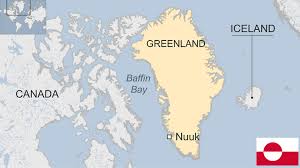
Greenland. Trump has framed the acquisition of the world’s largest island as an “absolute necessity” for American national security, citing a need to preempt control by rivals Russia and China.
Current Status and Recent Threats
- “The Easy Way or the Hard Way”: On January 10, 2026, Trump told reporters he intends to acquire Greenland “the easy way” (through purchase or diplomacy) or “the hard way,” a comment widely interpreted as a threat of military annexation.
- Venezuela Precedent: Concerns over U.S. military action escalated following a January 2026 operation in which U.S. forces captured Venezuelan leader Nicolás Maduro. Trump’s aides have since pointed to the success of that mission as evidence of American capability.
- Diplomatic Stalemate: Denmark and Greenland’s governments have repeatedly asserted that the island is “not for sale” and belongs to its people. Danish Prime Minister Mette Frederiksen warned that any U.S. move to take Greenland by force would “spell the end of NATO”.
Motivations for Acquisition
- National Security: Trump emphasizes Greenland’s strategic location in the Arctic, which serves as a gateway between North America and Europe. He has argued that the island is “covered with Russian and Chinese ships,” a claim analysts say lacks evidence but underscores his geopolitical concerns.
- Natural Resources: Greenland is rich in untapped minerals, including 25 of 34 materials deemed “critical” by the EU, such as rare earth elements vital for modern technology and defense.
- Strategic Defense: The island hosts the Pituffik Space Base (formerly Thule Air Base), a key node in the U.S. missile early warning system. Trump argues that “ownership” is required to properly defend these interests rather than relying on leases.

Proposed Methods of Acquisition
- Direct Purchase: While the White House is “actively” discussing a purchase offer, Secretary of State Marco Rubio is scheduled for talks with Danish leaders in mid-January 2026.
- Financial Incentives: Reports suggest the U.S. has considered offering lump-sum payments to Greenland’s 57,000 residents—ranging from $10,000 to $100,000 per person—to influence support for joining the U.S..
- Compact of Free Association (COFA): U.S. officials have discussed an agreement similar to those with Pacific nations like Palau, where Greenland would be independent but the U.S. would handle its defense in exchange for economic aid.
- Military Action: The White House has officially stated that “utilizing the U.S. military is always an option” for this foreign policy goal.
Political Context
- Greenlandic Sovereignty: Greenland is a semi-autonomous territory of Denmark. While a majority of Greenlanders support eventual independence from Denmark, polling indicates approximately 85% oppose becoming part of the United States.
- International Support: Major European powers including France, Germany, the UK, and Poland have signed a joint statement supporting Denmark’s sovereignty over Greenland.